Innovation in Asia
RESEARCH COMMISSION | LONDON | 2025
A research collaboration between Green Shoots Foundation, Green Lab, and a University College London MSc Business & Sustainability under-graduate, evaluated innovative approaches to nutrient recycling and circular agriculture in Southeast Asia.
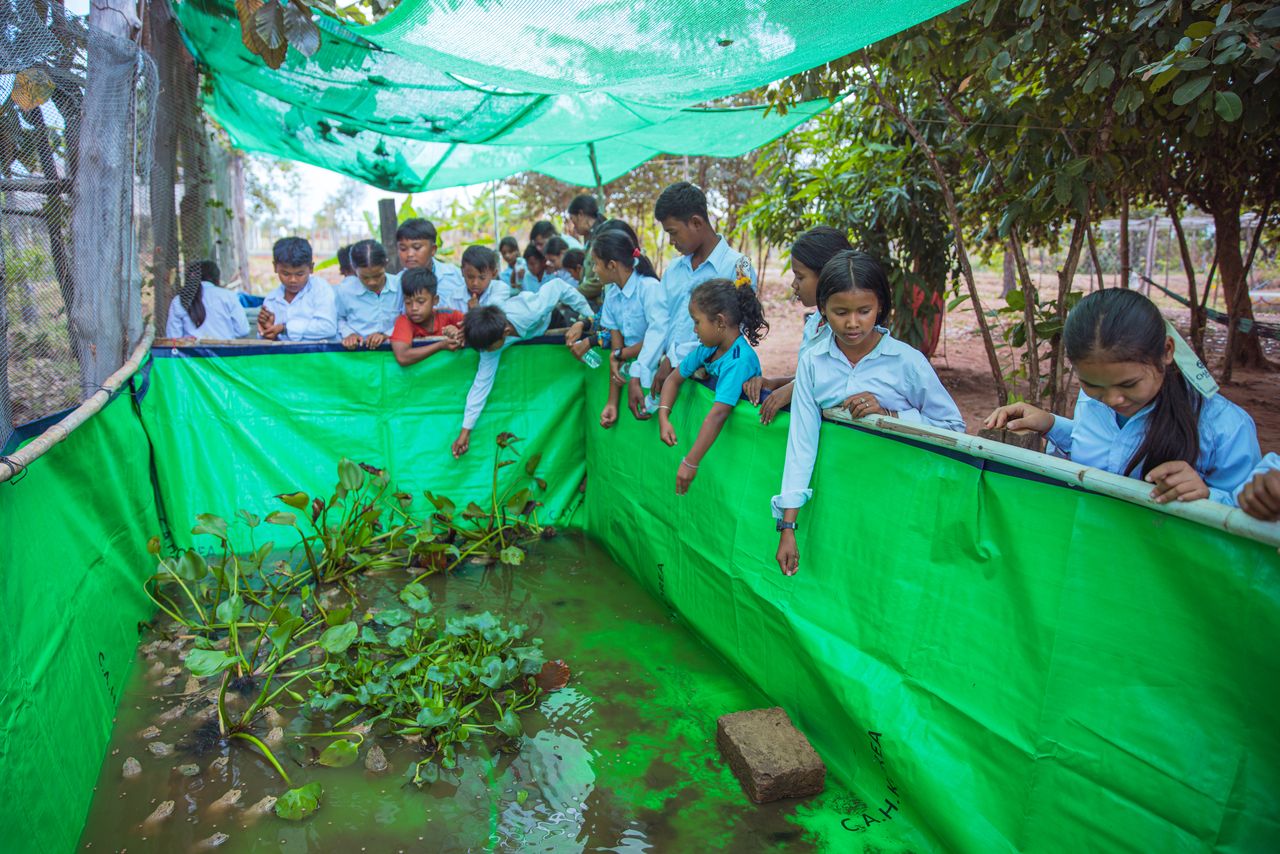
Photo credit: Green Shoots Foundation (c) 2025
The project explored circular approaches to sustainable farming, focusing on the viability of human-waste-based fertilisers as a low-cost, locally sourced alternative to chemical inputs. The following summary provides an overview of the initiative and its key outcomes. It has been adapted for public and web use to highlight the project’s potential without disclosing confidential data or detailed research findings.
Across Southeast Asia, smallholder farmers have faced rising fertiliser prices, soil degradation, and increasing climate pressures. The research examined how nutrient recovery from human waste – particularly urine-based fertilisers (UBFs) – could support food security and environmental resilience through circular, community-driven systems.
Agriculture accounts for 11.7% of global greenhouse gas emissions and 69% of freshwater use. In Vietnam, fertiliser application rates are roughly three times the global average, while in Cambodia, limited access and high prices constrain yields. Recycling nutrients already available within communities can reduce reliance on volatile imports and promote resource independence.
The study found that treated human urine contains up to 90% nitrogen, 80% phosphorus, and 95% potassium – essential macronutrients for plant growth. When properly processed, UBFs perform comparably to commercial fertilisers but with far lower environmental impact.
Public perception research showed encouraging results: 88% of respondents said they would buy crops grown with UBF if safety was proven, and 70% believed the fertiliser could be safe with adequate treatment. These insights point to strong potential for market acceptance when supported by education, safety standards, and government endorsement.
Aligned with UN SDGs 2, 6, and 12, the project demonstrates how circular fertiliser innovation can reduce emissions, improve farm resilience, and strengthen rural sanitation systems. It highlights the need for community training, affordable treatment methods, and clear policy frameworks to scale adoption.
More than a scientific exercise, the initiative represents a vision for regenerative food systems – where human ingenuity and local ecosystems work together to nourish communities and drive a sustainable future for Southeast Asia.
For more information on our research collaboration contact hello@greenlab.org.
Inspired?
Get in touch to find out how we can help your organisation design practical, regenerative solutions tailored to your place, people, and goals.