FUTURE FOOD LAB
FUTURE LIVING LAB | BERLIN | 2023

Led by Green Lab in partnership with HTW Berlin – University of Applied Sciences, Green Lab collaborated with HTW Berlin to develop the Future Food Living Lab – a new kind of urban innovation space focused on rethinking how we grow, prepare, and engage with food in the city. Designed as a decentralised, regenerative system embedded within Berlin’s academic and civic life, the Living Lab supported education, research, and public engagement around future food systems.
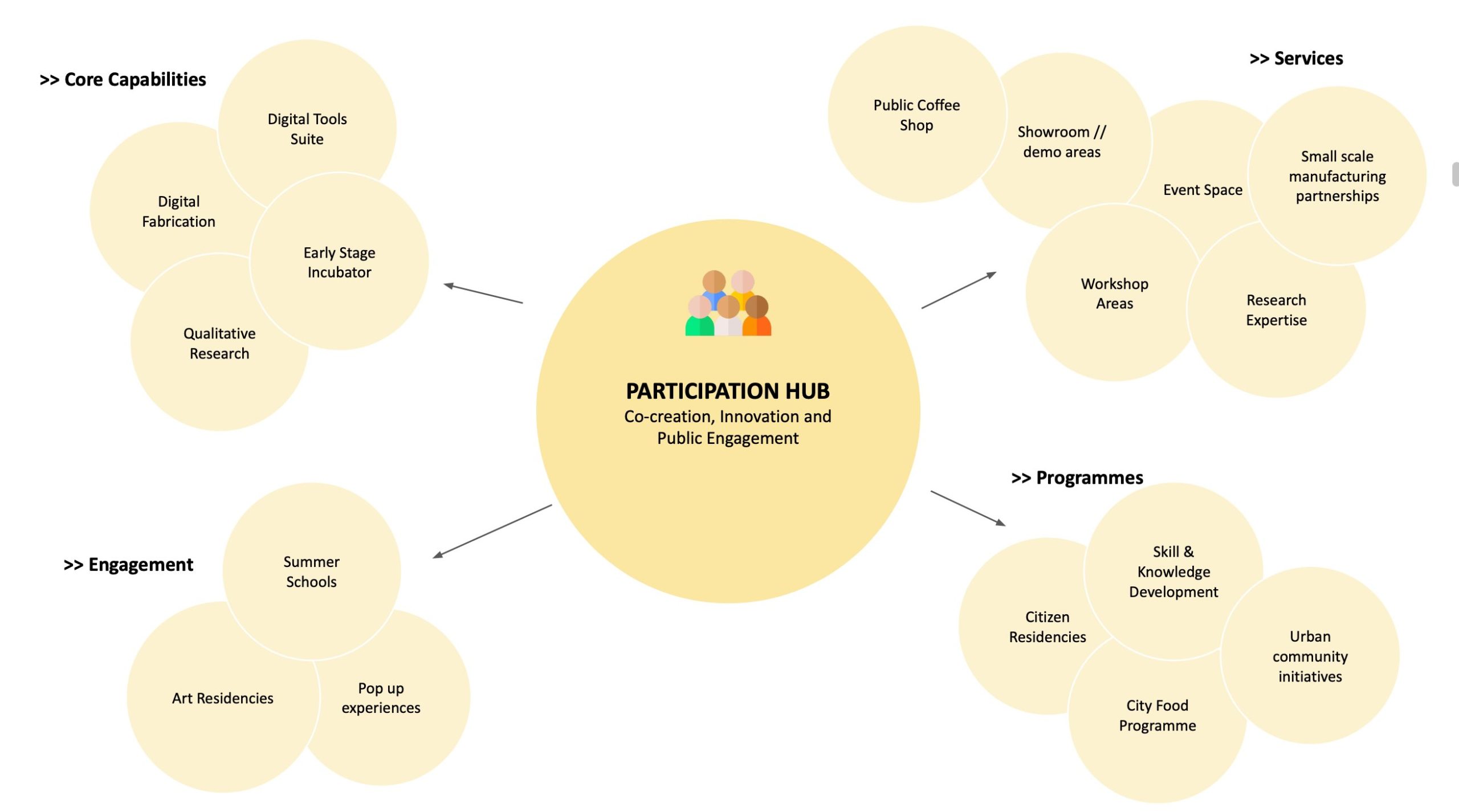
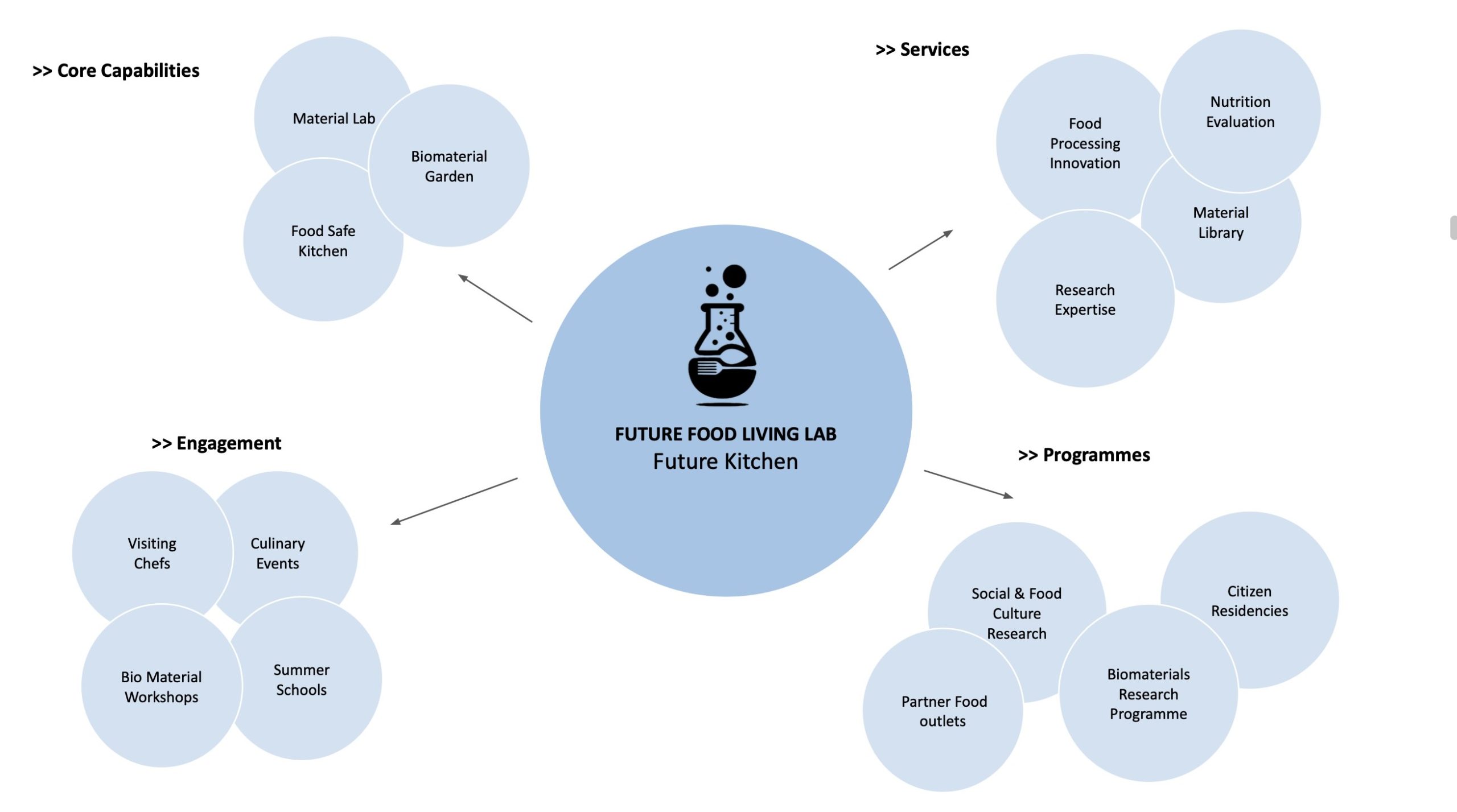
At the heart of the project were three core spaces: the Future Farm, the Future Kitchen, and the Participation Hub. Each space played a different role in helping people imagine, test, and experience more sustainable and circular food futures.
The Future Farm functioned as a working urban agriculture space that cultivated alternative food sources like salt-tolerant plants, algae, and insects. It was powered by circular systems using renewable energy, grey water, and organic waste – demonstrating how food could be grown locally and sustainably in urban environments.
The Future Kitchen served as a space where food and material innovation converged. Students and citizens used the facility to experiment with new ingredients, develop recipes, and explore biomaterials made from organic waste. It offered a flexible environment for both nutrition education and early-stage material research.
The Participation Hub operated as the social core of the lab – a place for workshops, co-creation, prototyping, and public learning. It brought together students, researchers, businesses, and local citizens in shared experiences that raised awareness and sparked new ideas.
Green Lab led the development of the overall strategy and five-year roadmap, outlining how the Living Lab could evolve over time. We also shaped the physical design, infrastructure, and supporting digital tools – including maker facilities, simulation technologies, and a startup incubation programme.
This project stood as a strong example of how institutions like universities could lead in regenerative thinking – not just through research, but by opening their spaces to experimentation, collaboration, and real-world impact.

Inspired?
Get in touch to find out how we can help your organisation design practical, regenerative solutions tailored to your place, people, and goals.